Care & Preservation
The Final Touch.
A frame protects the photograph and defines how it lives in the room. The right materials keep the print stable, reduce reflections, and preserve it for decades. This guide covers the essentials, whether you choose a Ready to Hang option or frame locally.
Not sure about scale yet? Start with the Size & Selection Guide.
01. The Breathing Space
Every Limited Edition print includes a protective white border. When framing, I strongly recommend using a museum mount (passpartout).
Why it matters:
A museum mount creates a small air gap between the print and the glazing.
It helps prevent moisture issues and keeps the print surface from ever touching the glass.
Note: Ready to Hang framed prints always include a museum-quality acid-free passpartout.
02. The Signature Frame
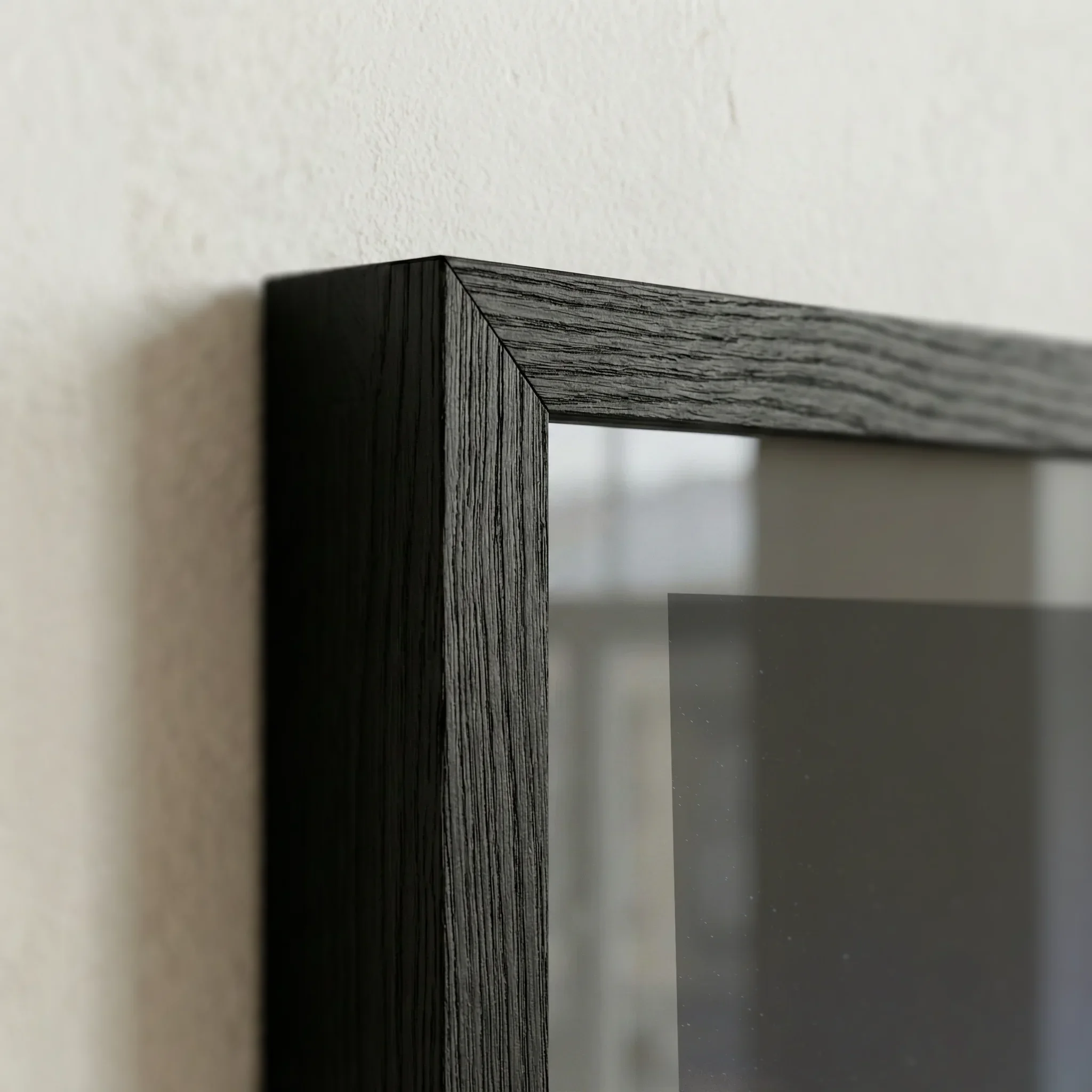
For my Limited Editions, I use a frame style that stays quiet and lets the photograph lead.
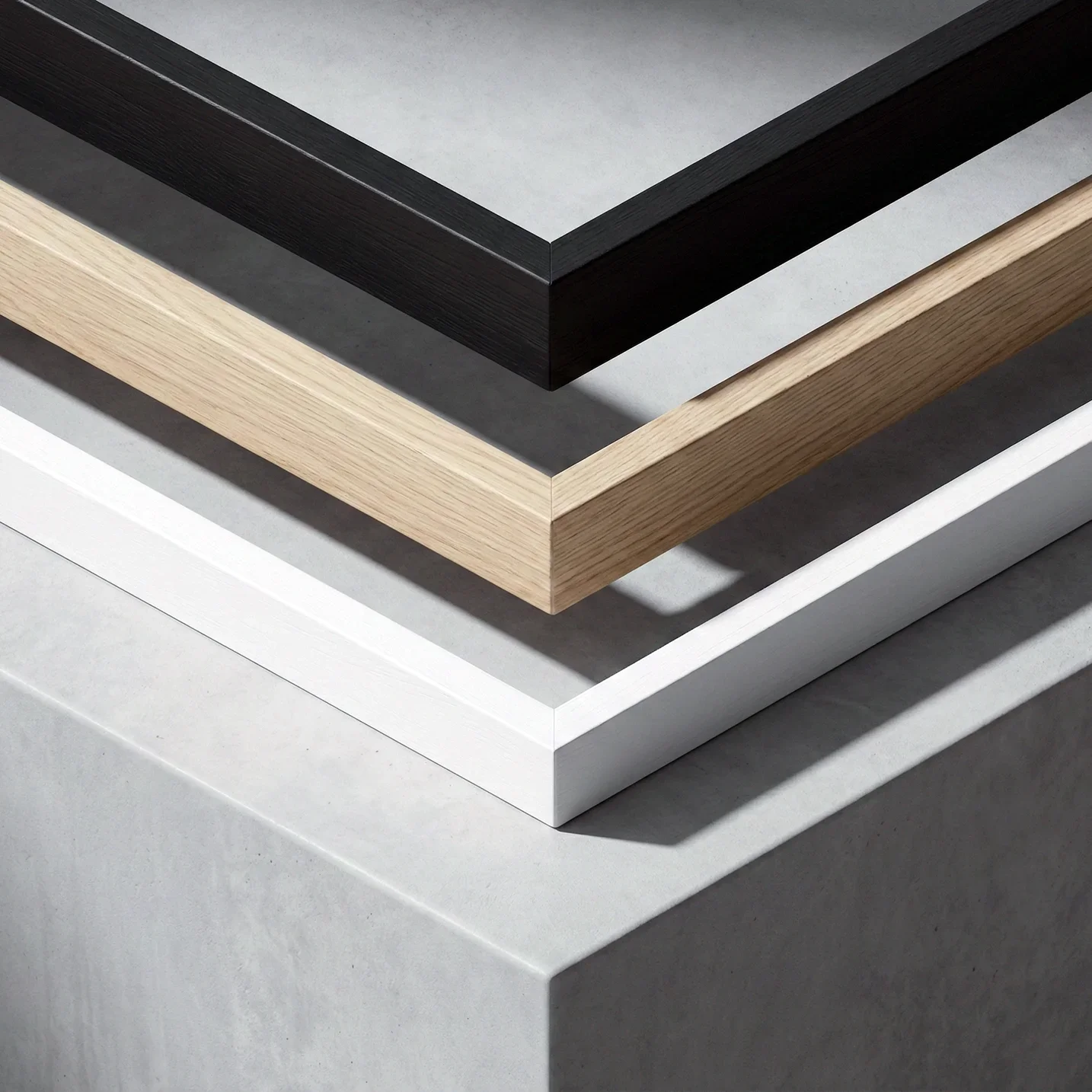
A black gallery frame built from a wood-coated aluminium profile with clean lines and a timeless matte finish. It holds the darkness of the photograph, creating a calm window into the landscape.
If you purchase an Unframed print, you have the freedom to use a local professional framer. Ask for archival, acid-free materials and a museum mount to preserve the work long-term.
03. The Invisible Barrier
Standard glass reflects the room and softens the dark tones. Anti-reflective glazing keeps the photograph clear and quiet.
The Standard:
Ready to Hang works use anti-reflective art glass.
For larger formats, gallery-grade acrylic may be used for safe shipping.
It blocks harmful UV rays, which helps protect the print from fading. It also keeps the deep blacks clear and reduces distracting reflections.
Common Questions
Do you sell prints framed?
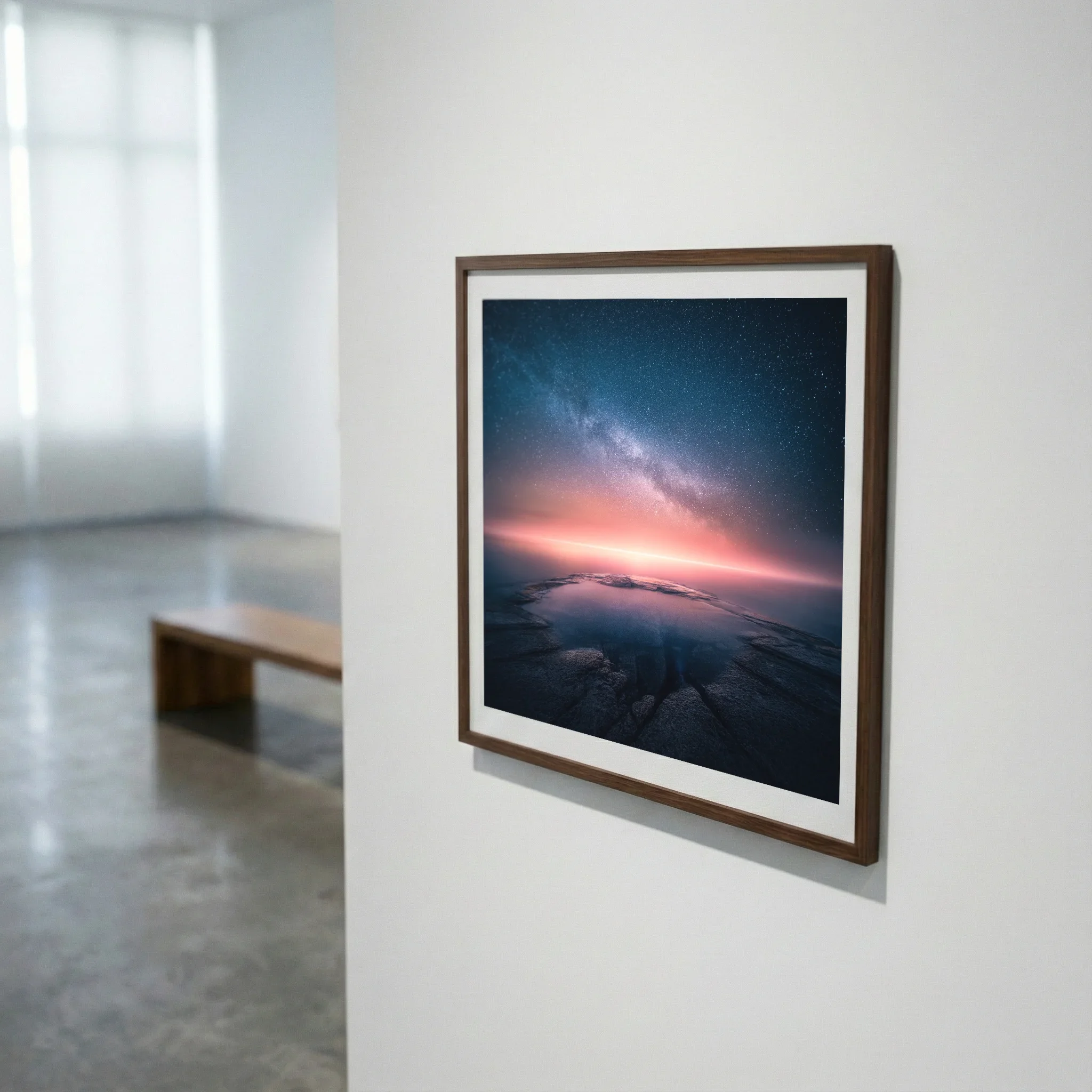
I offer a museum-quality "Ready to Hang" option for selected sizes. Each piece is professionally framed, inspected, and shipped with protective packaging.
Is shipping framed art safe?
Framed works are shipped in protective packaging designed for art delivery, with added reinforcement for international transport.
Can I use my own framer?
The "Fine Art Print (Unframed)" option is ideal if you want to choose a specific frame style locally or work with a framer you trust.
How should I handle the print?
Hold the work only by the white border. Avoid touching the image surface. If possible, use clean cotton gloves during framing.
How long will it last?
All works are archival pigment prints on Hahnemühle cotton paper. When framed behind UV-protective glazing, they remain stable for generations.
Do you include a certificate?
Each Limited Edition includes a signed Certificate of Authenticity and edition details.