Underneath the Surface
Go beyond the visible
A one-of-one artwork captured in Finnish Lapland.
Some art is created. Other art is earned.
This piece was earned in the cold.

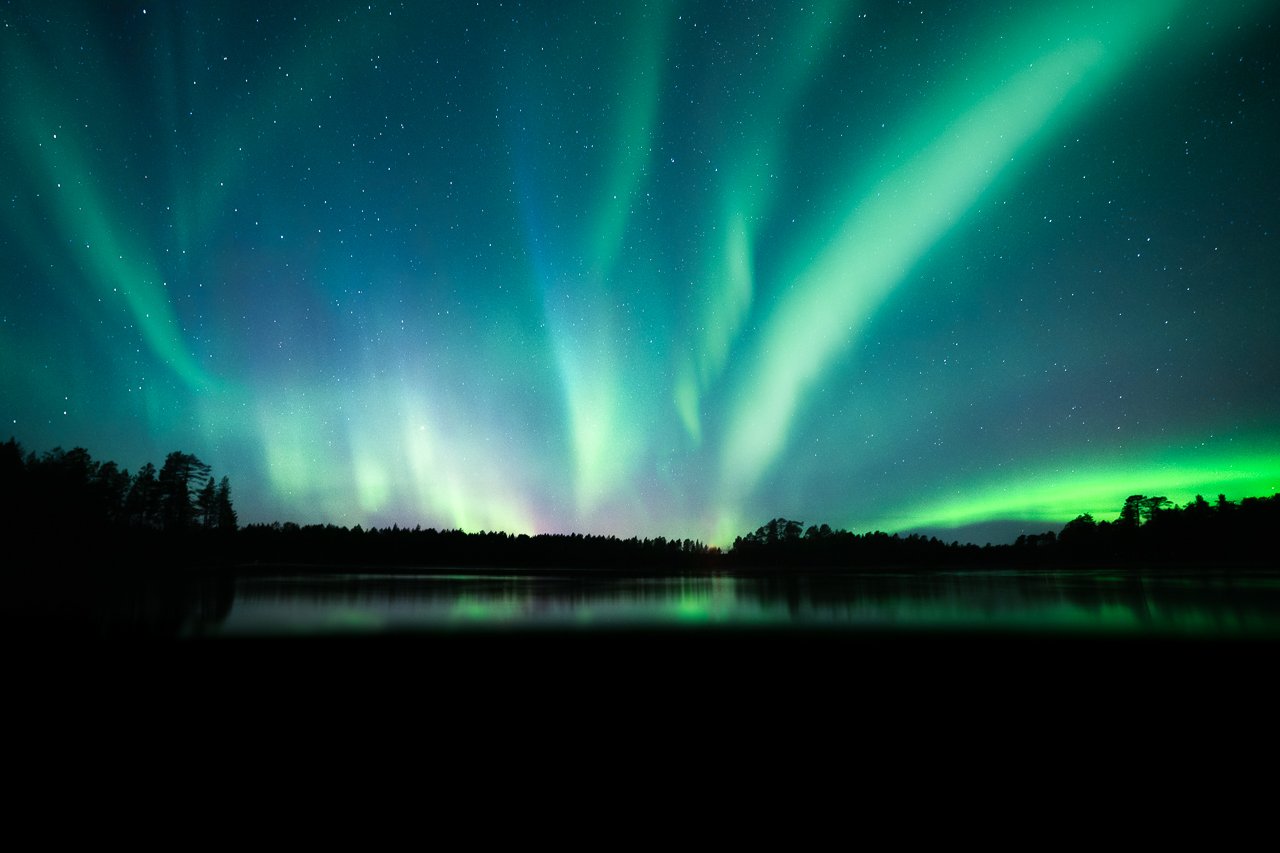
This photograph captures a moment that cannot be replicated.
My goal was specific: to photograph the Aurora Borealis from a perspective rarely seen in Finnish Lapland. I wanted to bridge the visible world with the silent one beneath the ice.
The conditions were unforgiving. The water was near freezing. The wind was relentless. It was not just about composition; it was about endurance. I stood in the water, waiting for the wind to die down and the sky to clear.
Then, the elements aligned. The result is Underneath The Surface. It stands as a defining moment in my career and one of my earliest on-chain works using this approach.

Testing and Scouting
This was my first attempt at underwater housing in these conditions. The wind stirred up sediment and clouded the water. A clear shot required absolute calm.
The First Try
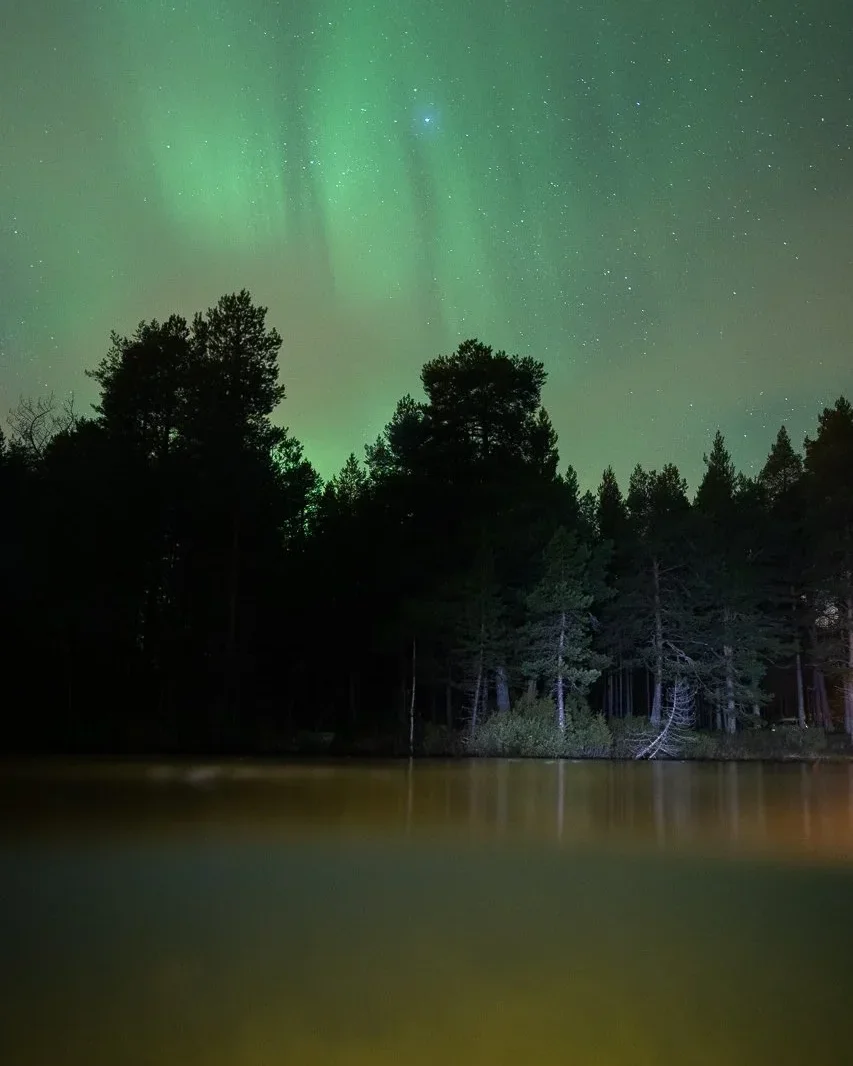
I headed to a small lake I had scouted earlier. The wind picked up. The water turned hazy. I stood there as clouds covered the night sky.
I stayed in the cold water for three hours. I left with nothing. The next day, I heard the sky had exploded with light just after I packed up.
But the failure only clarified the vision. I knew what I had to do next.
How I Captured the Photograph
Two exposures. Two worlds. The swap below shows what the camera saw above the surface, and what it gathered beneath.
Hover over the text blocks to view layers Tap text to switch layers
Above
After the earlier failures, I returned to the water. Thirty minutes later, streaks of Aurora Borealis appeared, sudden and precise.
I knew time was short. I pulled the camera upwards to capture the lights above the surface, leaving one third of the frame underwater.
Below
I tilted the camera downward to avoid disturbing the sediment. A flash illuminated the log, creating a foreground to anchor the image.
I exposed the underwater world for several minutes to gather enough light.

The Edit
The raw material was there. The edit focused on blending the two exposures into a cohesive view.
Software: Adobe Lightroom Classic CC & Adobe Photoshop CC
Merging the short exposure of the sky with the long exposure of the water. Using masking to ensure a natural transition at the waterline.
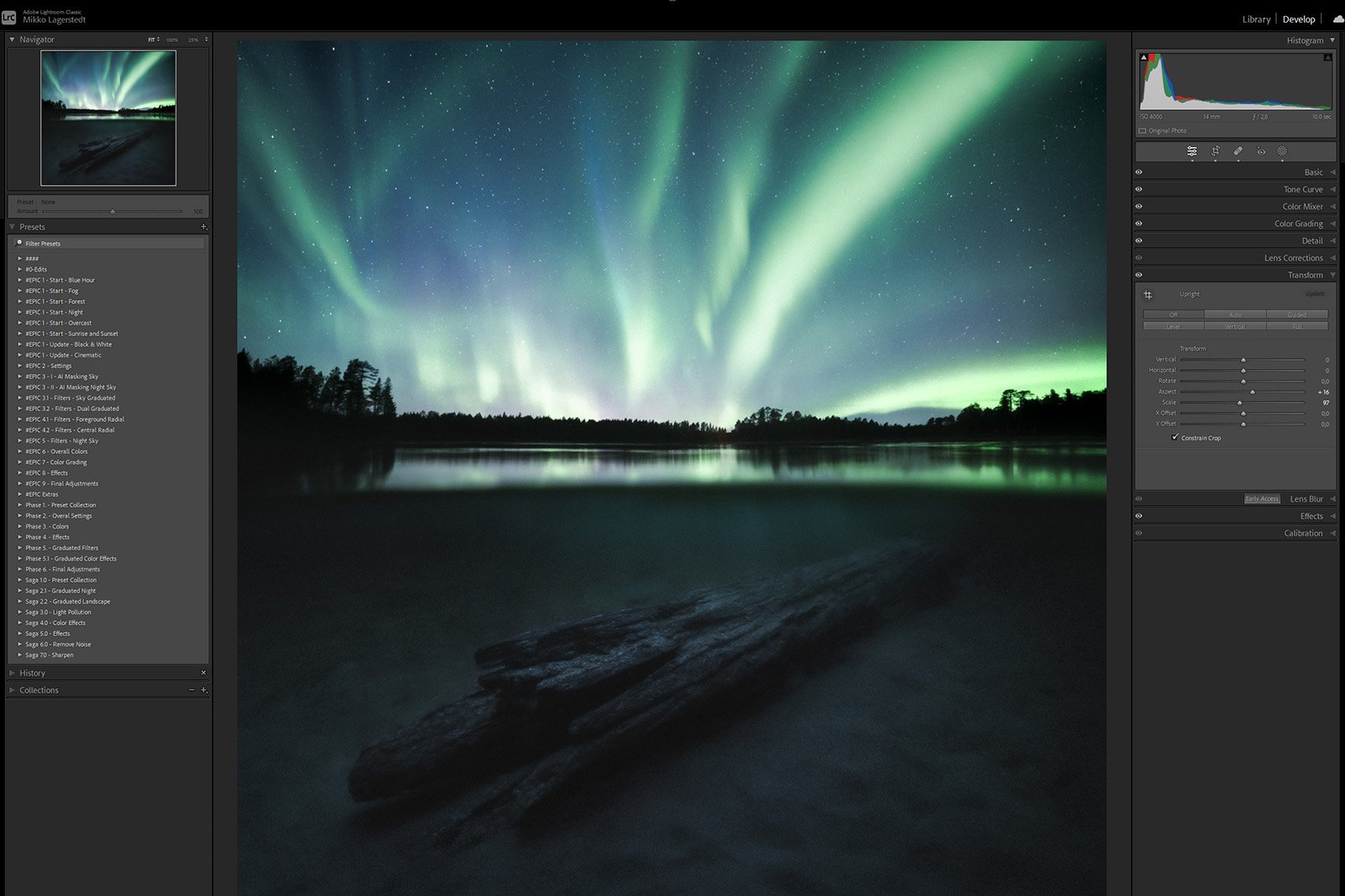
Applying color balance to unify the cold tones of the water with the vibrant green of the Aurora.
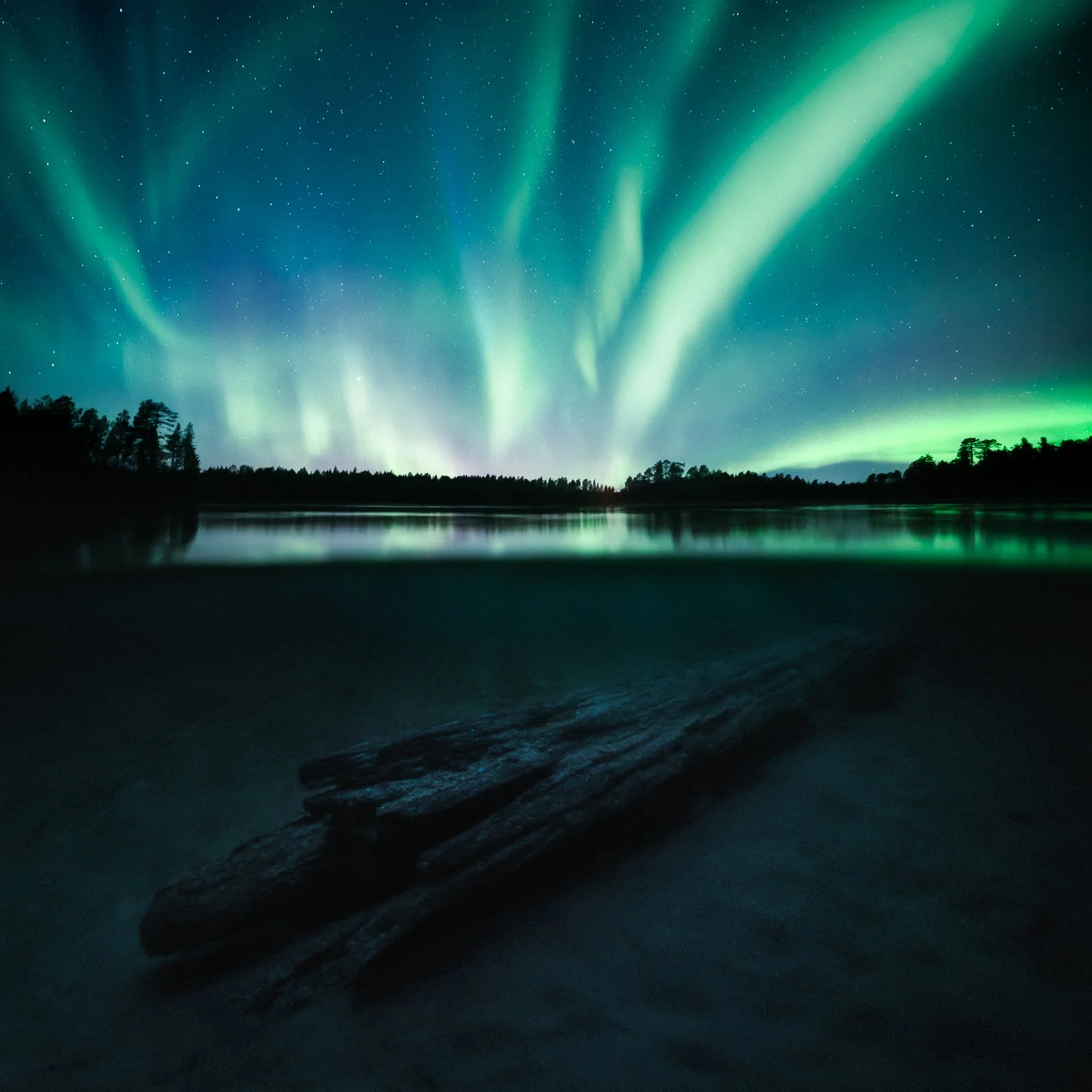
Warping and aligning the surface tension to create a seamless visual flow between the two worlds.
BTS Photos From the Shoot
Documenting the process in the field.
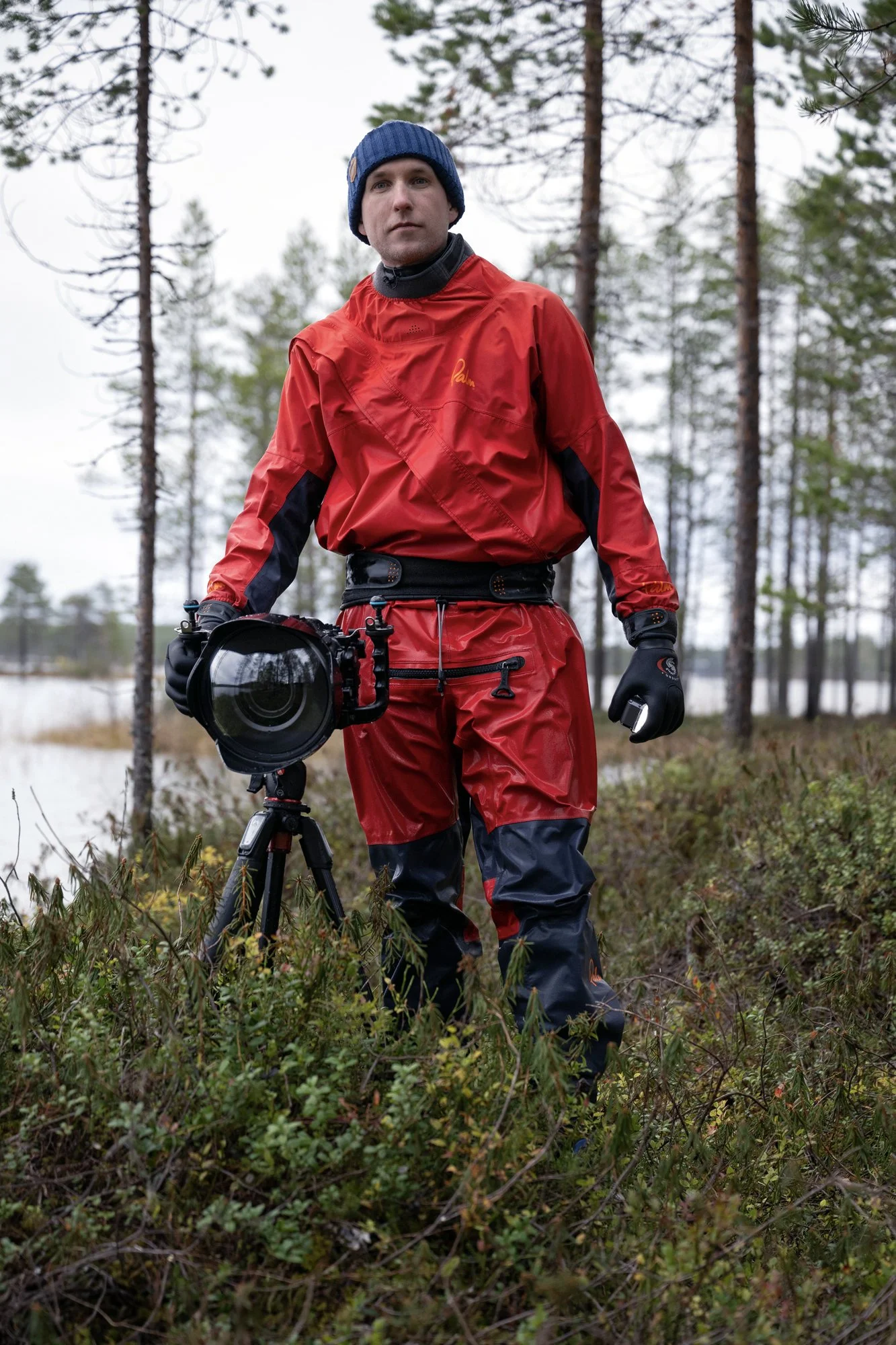
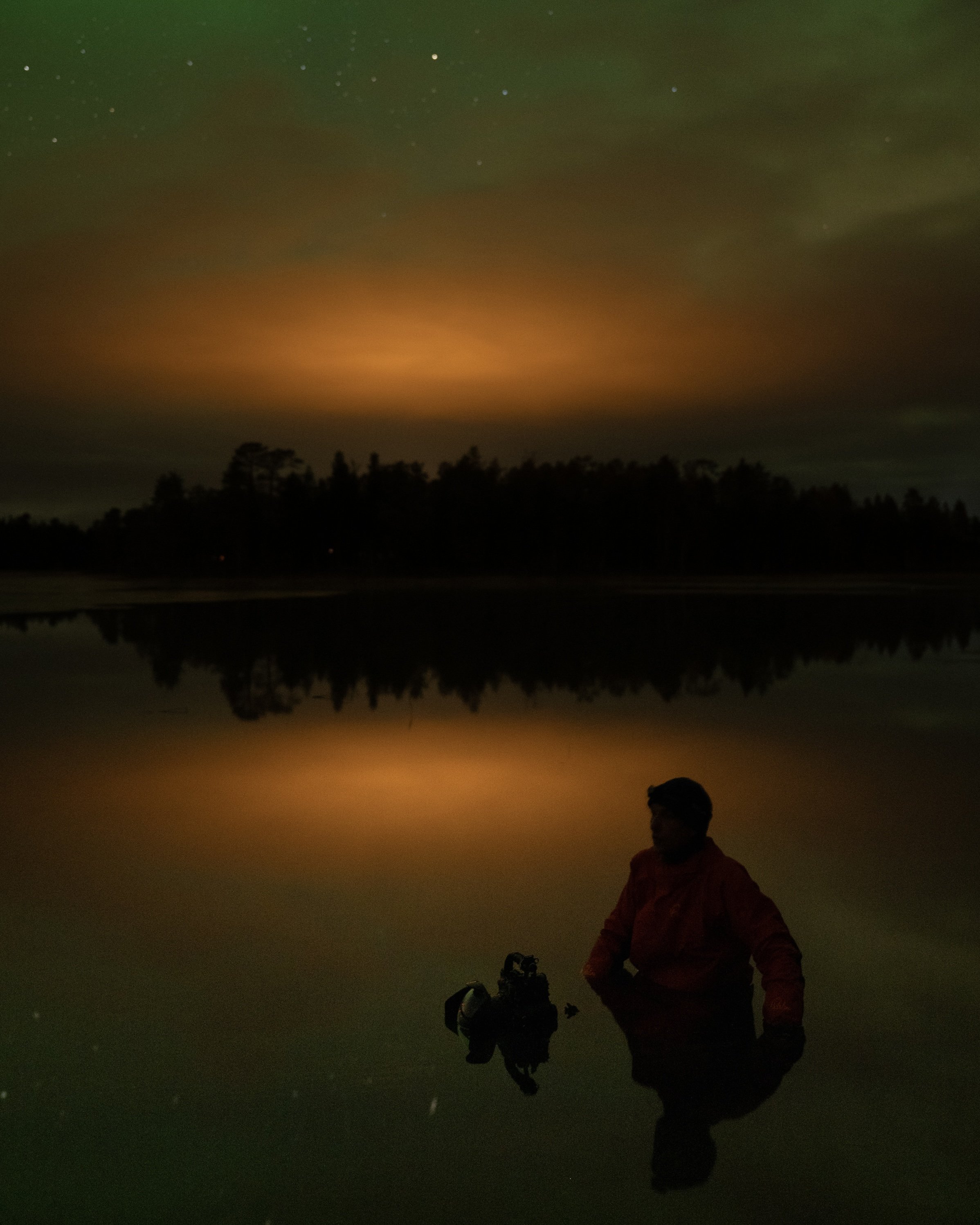

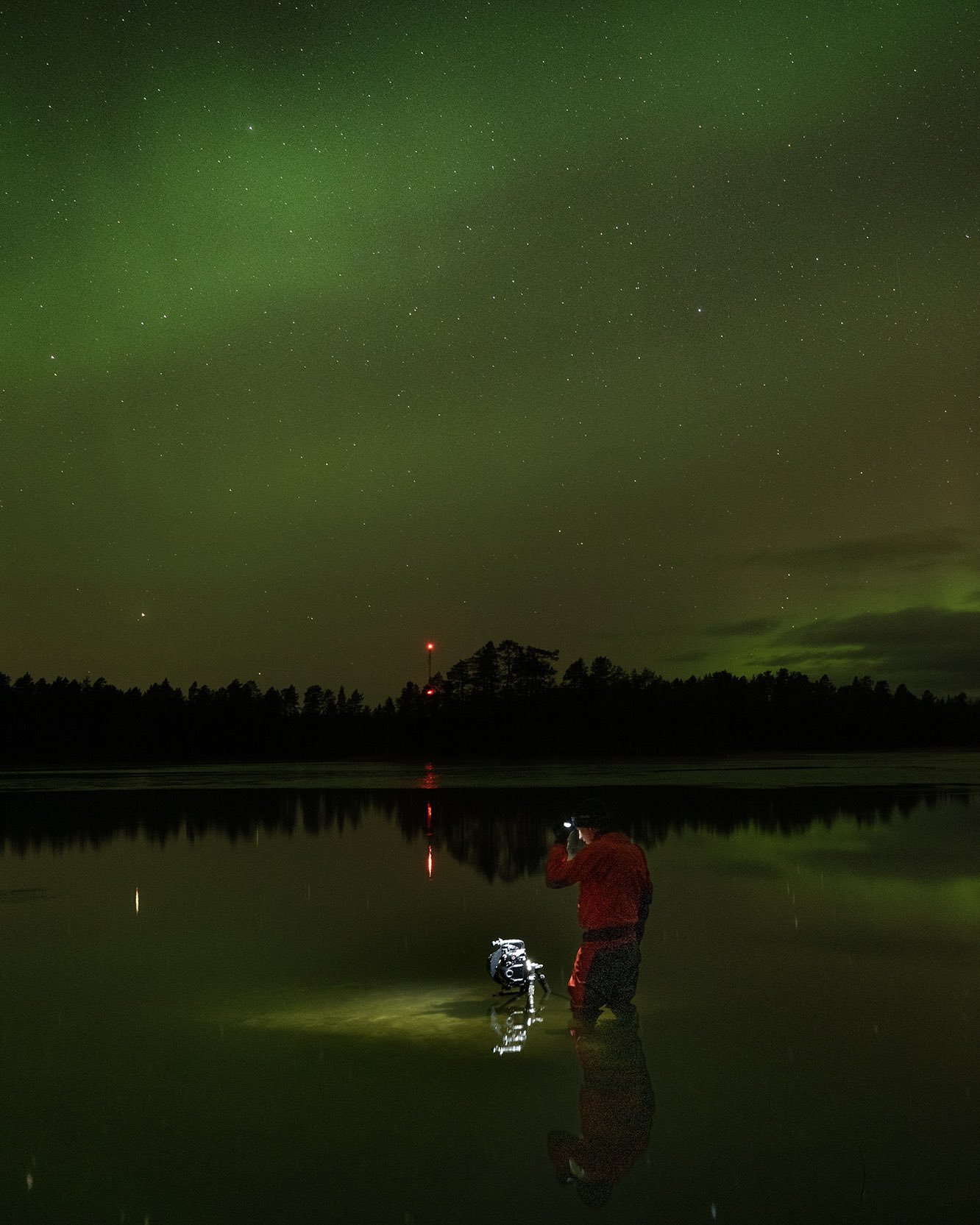
See BTS Video
This film documents the reality of the shoot: the cold, the darkness, and the decisions made in the water.
Underneath the Surface
Join the story of this landmark photograph.